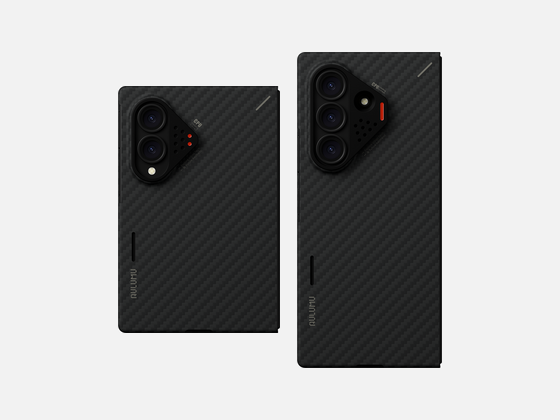


In 2026, the foldable phone market saw a significant change: Apple officially entered the market. On September 9th, Apple officially released its first iPhone Fold —the iPhone Duo. Meanwhile, Samsung had already iterated through multiple generations of its Galaxy Z Fold series. This means that comparing the iPhone Fold and Galaxy Z Fold is no longer about comparing a "rumored iPhone Fold " and a mature product, but rather about focusing on the actual hardware specifications, software features, and user experience. So, what are the core differences between the iPhone Duo and Galaxy Z Fold8? This article will compare them from multiple perspectives to reveal the differences between the two.

iPhone Duo vs Galaxy Z Fold8: Quick Specifications Comparison
Let's start with the most intuitive hardware parameters.
|
Specification |
iPhone Duo |
Galaxy Z Fold8 |
|
Product Type |
Horizontal folding phone |
Horizontal folding phone |
|
outer screen |
5.4-inch OLED |
5.5-inch Dynamic AMOLED 2X |
|
External screen resolution |
1398 × 2034 |
1248 × 1972 |
|
External screen PPI |
460ppi |
428ppi |
|
Inner screen |
7.6-inch OLED |
7.6-inch Dynamic AMOLED 2X |
|
Inner screen resolution |
1878 × 2670 |
1848 × 2448 |
|
Inner screen PPI |
430ppi |
403ppi |
|
refresh rate |
ProMotion, adaptive up to 120Hz |
Adaptive 1–120Hz |
|
Unfolding thickness |
5.2mm |
4.5mm |
|
Fold thickness |
11.3mm |
9.7mm |
|
Weight |
254g |
201g |
|
Chip |
A20 Pro |
Snapdragon 8 Elite Gen 5 for Galaxy |
|
Rear camera |
48MP + 48MP |
50MP + 50MP |
|
Battery |
Dual-battery architecture |
4800mAh dual batteries |
|
Video playback |
Inner screen up to 31 hours |
Up to 26 hours |
|
Storage |
256GB / 512GB / 1TB / 2TB |
256GB / 512GB / 1TB |
|
Protection |
IP68 |
IP48 |
|
System |
iOS 27 |
Android 17 + One UI 9 |
|
Starting price |
$1,999 |
$1,899.99 |
|
Biometrics |
Touch ID |
Fingerprint recognition |
Looking at the data, both phones use a very similar 7.6-inch internal screen size, but there are significant differences in their body designs: the Galaxy Z Fold8 weighs 201g, while the iPhone Duo weighs 254g, a difference of 53g; their unfolded thicknesses are 4.5mm and 5.2mm respectively. If you are particularly concerned about the weight and portability of a foldable phone, then these figures are worth paying close attention to.
Design and Size: The iPhone Duo is heavier, while the Galaxy Z Fold8 is lighter and thinner
The iPhone Duo features a Grade 5 titanium body with a polished finish and a precision hinge. When unfolded, it's only 5.2mm thick; when folded, it's 11.3mm thick and weighs 254g. The Galaxy Z Fold8 further emphasizes a slim and lightweight design. It's 4.5mm thick when unfolded and 9.7mm thick when folded, weighing only 201g, making it Samsung's lightest Galaxy Z Fold to date. The body uses Armor Aluminum and incorporates two layers of Titanium in the display structure, while also utilizing Armor FlexHinge. This means that although both products are large-sized horizontally folding phones, their design priorities are not entirely the same. The 53g weight difference is not negligible for everyday carrying.
Display: Both phones are 7.6 inches, but the screen specifications are different
The screen is the part of these two foldable phones that they have in common. When unfolded, the iPhone Duo features a 7.6-inch Super Retina XDR OLED foldable screen with a resolution of 1878 × 2670 and a pixel density of 430ppi. The outer screen is a 5.4-inch OLED with a resolution of 1398 × 2034 and a pixel density of 460ppi. Both screens support ProMotion adaptive refresh rates up to 120Hz and support Always-On Display, HDR, True Tone, and the P3 wide color gamut. Peak outdoor brightness reaches 3000 nits.More notably, the iPhone Duo's inner screen uses a nano-texture surface, which Apple states reduces reflections and minimizes the visual presence of fold lines.
The Galaxy Z Fold8 also features a 7.6-inch main screen, but uses a Dynamic AMOLED 2X with a resolution of 1848 × 2448, 403ppi, and supports an adaptive refresh rate of 1–120Hz.The external screen is 5.5 inches with a resolution of 1248 × 1972 and 428ppi, and also supports a maximum refresh rate of 120Hz.The Galaxy Z Fold8 has a 4:3 internal screen and a 10:16 external screen. This design is clearly geared towards web browsing, social media, and multitasking.
Therefore, although both phones use large 7.6-inch screens, the actual user experience will still be affected by screen ratio, system layout, and application compatibility.
Performance: A20 Pro vs Snapdragon 8 Elite Gen 5 for Galaxy
The iPhone Duo is powered by the A20 Pro, Apple's next-generation flagship chip, slated for release in 2026. According to Apple, the A20 Pro uses a 2nm process and features a 6-core CPU , a 7-core GPU , dual 16-core Neural Engines , hardware-accelerated ray tracing , and 50% higher unified memory bandwidth . Apple states that compared to the A19 Pro, the A20 Pro offers up to 20% faster CPU performance, up to 40% faster GPU performance, and twice the computing power of its predecessor in the Neural Engine. The iPhone Duo also incorporates a custom vapor chamber to improve thermal performance under prolonged high loads.
The Galaxy Z Fold8 is powered by the Snapdragon 8 Elite Gen 5 for Galaxy. This is a flagship mobile platform customized for Galaxy, focusing on improving CPU, GPU, and NPU performance, while also supporting Galaxy AI-related features. Samsung has also added capabilities such as real-time ray tracing for gaming.
Therefore, the performance competition between the two phones is no longer just about traditional CPU benchmarks, but extends to AI computing , gaming experience, video editing , multitasking , and on-device AI. Of particular note is the iPhone Duo's dedicated cooling structure, indicating that Apple didn't simply put a flagship chip into a foldable body, but rather redesigned it for sustained performance in foldable devices.
 Camera: 48MP Dual Fusion vs Dual 50MP
The camera is one of the most significant differences between the two phones. Their camera approaches are quite different : the iPhone Duo emphasizes computational photography, video, and new shooting methods when folded; while the Galaxy Z Fold8 emphasizes a high-resolution dual-camera setup, Galaxy AI, and FlexCam.
The iPhone Duo features a 48MP Dual Fusion Camera System, including a 48MP Fusion Main , a 48MP Fusion Ultra Wide , 2x optical-quality Telephoto , up to 10x digital zoom , 48MP macro , Night Mode , Smart HDR 5 , Photonic Engine , and Deep Fusion . The main camera has an f/1.6 aperture and supports sensor-shift optical image stabilization.
The ultra-wide-angle lens is 48MP with a 120° field of view. For video, the iPhone Duo supports up to 4K Dolby Vision at 120fps, and also features Cinematic Mode, Audio Mix, and image stabilization. Even more interesting are the shooting functions brought about by the folding structure. For example, Duo Preview allows the subject to preview the composition in real-time on the external screen; Smart Take uses on-device AI to determine the best time to shoot; and users can also prop the phone up directly for shooting using the folding angle.
The Galaxy Z Fold8 features a dual 50MP rear camera setup , with a 50MP Wide sensor , a 50MP Ultra Wide sensor , 2x Optical Quality Zoom , and up to 10x Digital Zoom . The main camera has an ƒ/1.8 aperture and supports Dual Pixel AF and OIS. The ultra-wide camera is 50MP and has a 120° field of view. Samsung has also incorporated the ProVisual Engine to improve detail and noise reduction in low-light conditions and supports up to 8K video recording.
Battery: Don't just compare mAh
Battery capacity in foldable phones has always been a topic of discussion. The Galaxy Z Fold8 uses a dual 4800mAh battery, with Samsung officially stating a maximum continuous video playback time of 26 hours. The iPhone Duo doesn't disclose its traditional mAh capacity, but instead uses two high-energy-density batteries, managing their energy as a single unit through software. Apple's official data shows up to 31 hours of video playback on the inner screen , up to 44 hours on the outer screen , and up to 24 hours with balanced use of both screens . Wired charging reaches 50% in approximately 20 minutes , and MagSafe wireless charging reaches 50% in approximately 30 minutes . Therefore, it's not appropriate to directly compare them using the logic of "larger mAh = better battery life." For foldable phones, screen size, chip efficiency, system optimization, and usage patterns all affect the final battery life.
Software: iOS 27 vs Android 17 + One UI 9
Hardware specifications are only one aspect of a foldable phone; the software truly determines the usability of the large screen. The iPhone Duo runs iOS 27 and features a redesigned multitasking experience specifically for its foldable form factor. One key feature is Split View. Users can open two apps simultaneously on the 7.6-inch inner screen, such as Safari + Notes , Mail + Calendar, web pages + documents, or video + chat . They can even open two windows of the same app at the same time, such as two Safari windows for content comparison.
Apple also allows users to save frequently used app combinations for quick launch later. This means that the iPhone Duo isn't simply putting iOS into a foldable screen, but rather starting to redesign the interaction for a larger screen.
The Galaxy Z Fold8 runs Android 17 and One UI 9. Samsung has accumulated experience in multi-generational products in foldable screen multitasking, including multi-window, split-screen, and Galaxy AI features. The Galaxy Z Fold8's 4:3 inner screen is also naturally suited for documents, web pages, emails, and productivity applications.
Therefore, the focus of the iPhone Duo is to adapt iOS to foldable screens, while the Galaxy Z Fold8 continues to enhance the already mature Fold multitasking experience.
AI: Apple Intelligence vs Galaxy AI
In 2026, flagship phones can no longer be compared solely on CPU and camera; AI will also become an important feature.
The iPhone Duo features Apple Intelligence and Siri AI. Apple integrates AI with personal context, screen content, and system apps. For example, Siri AI can provide relevant actions based on screen content, and users can also edit text and manipulate content using natural language.
The Galaxy Z Fold8 continues to center around Galaxy AI and adds features such as Now Nudge. Samsung's AI is more deeply integrated with multi-window and foldable screen usage, allowing users to continue working on tasks between the Cover Screen and the Main Screen.
Therefore, the two companies' AI approaches still reflect different ecological characteristics : Apple emphasizes personal context and the iOS ecosystem , while Samsung emphasizes the integration of AI with Android multitasking workflows.
Durability: IP68 vs IP48
Foldable screens have always faced a challenge: will the hinge and foldable screen compromise durability? The iPhone Duo uses a Grade 5 Titanium body, with a Ceramic Shield 2 outer screen and a Ceramic Shield back, achieving an IP68 water and dust resistance rating. Apple states that the iPhone Duo's hinge consists of over 100 components used to control opening and closing and support the inner screen. The Galaxy Z Fold8, on the other hand, uses an Armor Aluminum body, Gorilla Glass Ceramic 3 and Gorilla Glass Victus 2, and incorporates a two-layer Titanium display structure, while also using Armor FlexHinge. Its protection rating is IP48.
It's important to note that IP68 and IP48 cannot be simply interpreted as which phone is more drop-resistant overall. IP ratings primarily reflect dust and water resistance; actual drop resistance, scratch resistance, and long-term hinge durability also depend on materials, structure, and the environment in which the phone is used.
 iPhone Duo vs Galaxy Z Fold8: What should different users pay attention to?
If you are already choosing between these two products, you can compare them based on your own usage habits.
Already deeply using the Apple ecosystem
If your devices include a Mac, Apple Watch, AirPods, and iPad, then the biggest change in the iPhone Duo is not switching from an iPhone to an iPhone Fold , but rather adding a completely new device form factor to the existing Apple ecosystem.
Greater emphasis on multitasking
The Galaxy Z Fold8's 4:3 home screen and One UI multi-window feature are ideal for users who need to work with multiple apps simultaneously. The iPhone Duo now also supports Split View and dual-window functionality, so Apple is beginning to enhance the productivity experience of foldable screens.
More focus on portability
The data here is quite straightforward : the iPhone Duo weighs 254g , while the Galaxy Z Fold8 weighs 201g , a difference of 53g. Additionally , the iPhone Duo's folded thickness is 11.3mm , while the Galaxy Z Fold8 's is 9.7mm . Therefore, weight and folded dimensions are very real differences between the two products.
More attention to the screen
Both feature a 7.6-inch internal display and a refresh rate of up to 120Hz. The iPhone Duo boasts a 430ppi internal display and a peak outdoor brightness of 3000 nits; the Galaxy Z Fold8 uses a 7.6-inch Dynamic AMOLED 2X with 403ppi and also offers 3000 nits of outdoor display brightness.
More focused on photography and video
The iPhone Duo features a 48MP main camera and a 48MP ultra-wide-angle lens, supporting 4K Dolby Vision at 120fps. The Galaxy Z Fold8 features a 50MP main camera and a 50MP ultra-wide-angle lens, supporting 8K video. The two differ in their camera configurations, and actual performance will depend on factors such as shooting algorithms, video processing, and shooting capabilities when the phone is folded.
Conclusion
The official release of the iPhone Duo signifies a new phase for the foldable phone market. Samsung has already established a mature foldable product line with its Galaxy Z Fold series, while Apple has chosen to start from the iPhone ecosystem, integrating foldable screens with iOS, Apple Intelligence, and the Apple device ecosystem. Therefore, when comparing these two products, instead of focusing on just one parameter, it's more effective to comprehensively understand their differences across multiple dimensions, including screen, weight, performance, camera, battery life, system, ecosystem, and accessories. For consumers, the real question is no longer "Are foldable phones the future?" but rather, once a phone can unfold into a larger screen, do you hope it will first change your entertainment and work habits, or your entire mobile device usage habits?